 ChanTape
The visitor from 2036 had an oddly specific errand: retrieve an IBM 5100 computer from 1975.
In the account posted under the name TimeTravel_0 and later associated with John Titor, a future military assignment required an obsolete machine. The year 2000 was a stop along the route. It was an effective inversion of the usual future-tech fantasy: the astonishing device allegedly traveled through time to collect an old computer. 1
No verified evidence establishes that Titor came from the future. Several major predictions did not occur. What survives is a forum conversation whose mixture of technical detail, everyday answers, and unanswered questions became more durable than its forecasts.
An arrival made of replies
The Time Travel Institute’s current original-materials index locates the relevant activity between November 2000 and March 2001. It links preserved threads, separates later discussion, and warns that a subsequent account using the same name should not be confused with the original guest poster. 1
That distinction is fundamental to reading an old internet story. A display name is not a continuous identity. A revived thread is not necessarily a revived author. The present layout of a forum can also disguise the age and original context of a message imported from an earlier system.
For this reason, the strongest starting point is the post sequence and its archived provenance, rather than a list of prophecies assembled years afterward.
The conversation supplied the scenery
The preserved discussions place the visitor inside a community already interested in time-travel puzzles. Participants discussed paradoxes, parallel histories, and the possibility of changing the past. The threads do not read like a formal announcement delivered to a silent audience; they contain questions, objections, digressions, and replies. 2
That social environment helped the persona acquire dimensions. A future traveler who answers the next question can appear more substantial than one who issues a single manifesto. Skeptical readers contribute to the performance simply by giving the narrator more situations to address.
The archive also preserves the ordinary texture that summaries tend to remove. Thread limits, usernames, and follow-up questions keep the story attached to the practical constraints of a message board.

Why the old IBM mattered
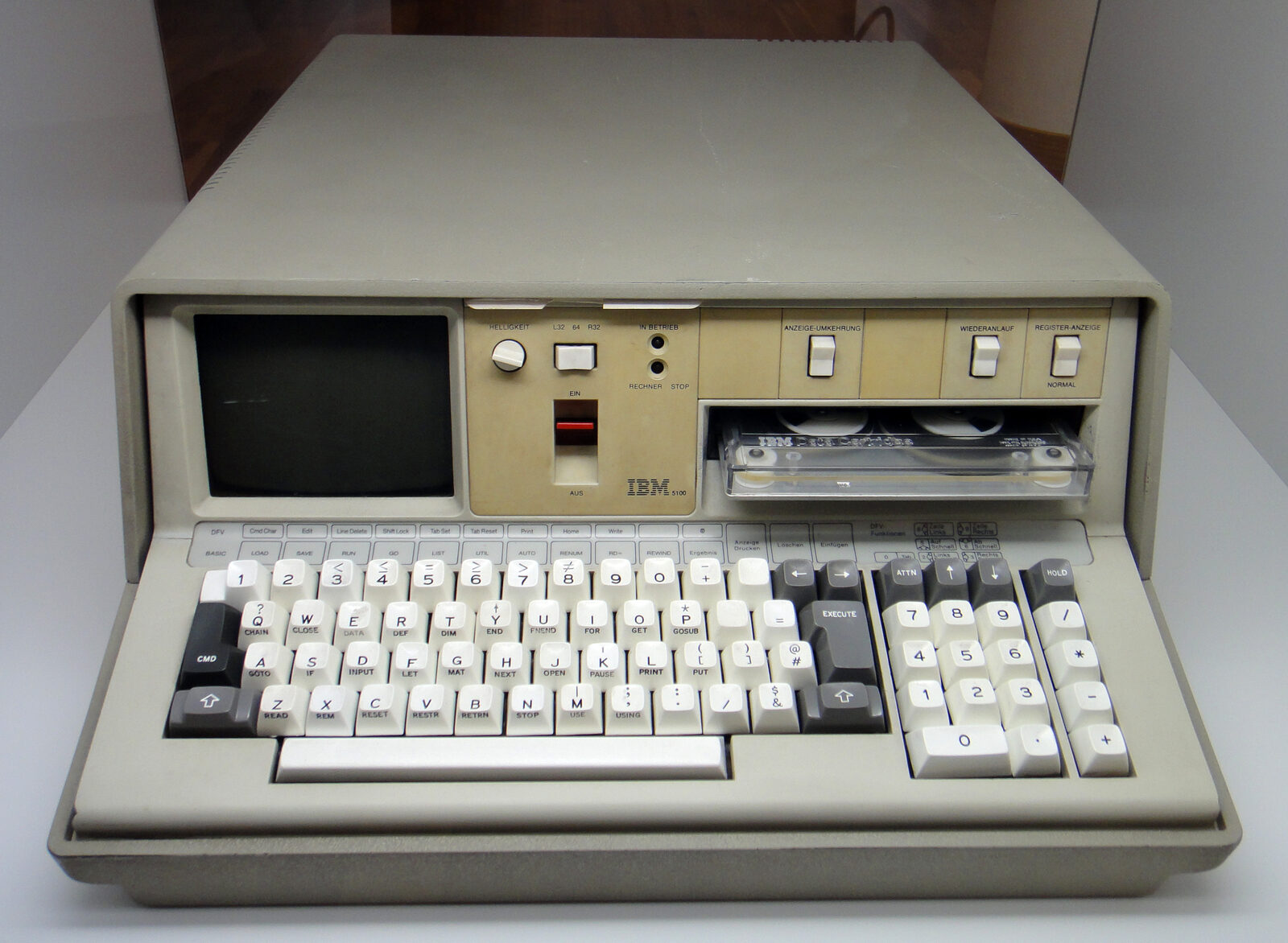
The mission’s central object was an IBM 5100. The material preserved at JohnTitor.com presents the computer as necessary for work on older software in Titor’s future. The website’s framing and the passages attributed to Titor should be distinguished: an archive’s explanatory voice is not automatically part of an original post. 4
A model number gives an extraordinary claim something tangible to orbit. Readers can inspect a real machine, investigate its capabilities, and feel that they have moved from speculation into verification.
But confirming a computer’s existence or a feature of its architecture would validate only that particular detail. It would not establish the proposed journey, the military assignment, or a working time machine. A true supporting fact can coexist with an invented overall account.
Photographs need a smaller caption
Images circulated with the story as depictions of equipment. A later Time Travel Institute discussion records readers looking for a higher-resolution IBM photograph and questioning the origin of associated imagery. It documents community interest in the material, not proof of a journey through time. 6
The appropriate caption therefore describes a photograph associated with the claim. It does not call the object an authenticated time machine or imply that the chain of custody has been established.
This small editorial choice prevents a common form of accidental laundering. An article cautiously questions a claim in its paragraphs while its image caption quietly certifies the same claim as fact. Readers scanning the page can leave with the stronger, unsupported version.
A future that missed its appointments
Titor’s account included a civil conflict in the United States and a later nuclear war. The original-materials index explicitly notes that these predictions did not come true. Discovery’s retrospective likewise treats the story as an alleged time-travel claim rather than an established event. 15
The failure is important because dates create opportunities for testing. An account that describes future events cannot reasonably claim the prestige of prediction while treating every unsuccessful forecast as irrelevant.
The story’s use of different worldlines supplies a narrative explanation for divergence. Within the fiction, events need not unfold identically. As evidence, however, that explanation cannot demonstrate the original journey. It makes the claim harder to test rather than supplying independent confirmation.
Timeline
- 1975 — Claimed destination Titor says his mission required an IBM 5100.
- 2000–2001 — Documented posting period The surviving conversation develops online.
- 2015 — Failed forecast The predicted nuclear-war scenario does not occur.
- 2036 — Claimed home year A narrative claim, not a verified origin.
An exit without a reveal
The preserved continuation thread includes material about leaving and returning home. It sits alongside the mundane problem of a forum discussion reaching its page limit. That juxtaposition is part of the archive’s peculiar appeal: an alleged departure from this world appears within ordinary administrative friction. 3
There is no securely established public identity that this article can attach to the original poster. Proposed explanations should be presented as proposals, with their evidence assessed individually. Naming a suspected author does not become responsible merely because an old theory has been repeated many times.
The lack of a confirmed author leaves a real historical question. It does not keep all the persona’s other claims equally plausible. The identity of a storyteller and the truth of a story are separate matters.
A forum can preserve an impossible visitor
Titor belongs to the web’s broader message-board culture, rather than originating on 4chan. That difference is worth retaining. Imageboards later circulated and reinterpreted the story, but the surviving conversations belong to an earlier setting with its own participants and habits.
The archive’s attraction is partly participatory. Readers can follow the questions in sequence and imagine which one they would have asked. A neatly edited article about a hoax closes possibilities. A thread full of replies keeps reproducing the sensation that a conversation might still be available.
It also records how credibility can accumulate without a decisive proof. Specific terminology creates a foothold; a photograph provides an object; a patient reply encourages another question. Each piece feels like progress even when the central proposition remains unsupported.
John Titor’s most defensible journey is therefore the one the documents actually show: from a guest identity to an enduring internet character. The world he described failed to arrive on schedule. The readers kept coming back.
Go to the source
Read the original-materials index and follow the archived threads
What we know
- Established A sequence of posts and responses survives in forum archives.
- Claimed The mission, future military service, and time machine come from the persona.
- Failed test Major dated predictions did not happen; an unresolved author identity does not repair them.
Sources
- Time Travel Institute — original-materials index
- Time Travel Institute — Time-travel Paradoxes!
- Time Travel Institute — Topics Limited to 11 Pages?
- JohnTitor.com — claimed mission and IBM 5100
- Discovery UK — John Titor retrospective
- Time Travel Institute — higher-resolution IBM image discussion
- Sandstein — IBM 5100 photograph, Wikimedia Commons