 ChanTape
The song had survived. Its name had not.
For years, people could listen to a recording from German radio without reliably identifying the band behind it. The object was available; the information that would connect it to a release, a group of musicians, and a place in music history was missing.
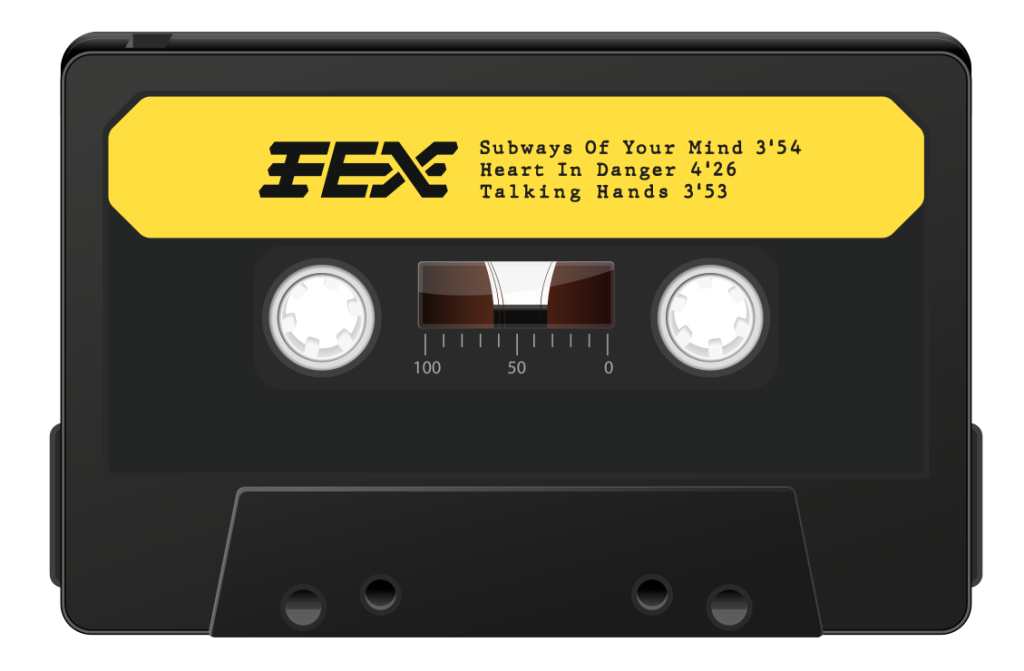
In November 2024, the search produced a name: Subways of Your Mind, by FEX. The band’s official history dates the breakthrough to November 4 and credits the Reddit user marijn1412. 1
The revelation did more than close a guessing game. It reunited a recording with people who could explain where it came from. A song known for being unknown suddenly had musicians, other tracks, and surviving material around it.
An ordinary recording became an unusual object
The central artifact was a song taped from the radio by a listener named Darius. Rolling Stone’s reporting describes how his sister Lydia uploaded a digitized excerpt in 2007 and how renewed sharing in 2019 brought a larger audience to the search. 4
The circumstances are unremarkable enough to be convincing. Radio listeners recorded songs they liked. Announcements could be missed, labels left incomplete, and a cassette could outlive the knowledge that once surrounded it.
An unidentified track creates a particular frustration. Every replay confirms that the object exists. It also repeats the absence. The singer finishes, the recording stops, and the question is still there.
A nickname can become a search tool
The Most Mysterious Song on the Internet was a useful identity for something without a verified title. It gave people a stable way to refer to the same recording across discussions.
But a nickname can also feel like a description of importance. The song did not need to be uniquely inexplicable for the search to matter. It needed enough committed listeners willing to compare clues and preserve the distinction between a good guess and a supported identification.
The broader term lostwave now covers searches for music whose performers or titles are unknown. It describes a problem of attribution and recovery rather than a single genre. A surviving file can be widely shared while remaining disconnected from its creators.
The breakthrough required more than another listen
WIRED’s reporting describes researchers working through material connected with Hörfest, a Hamburg event for amateur bands. The inquiry involved records, candidate groups, and shared research rather than a single inspired interpretation of a lyric. A trail through another band eventually led to FEX. 3
That is a less cinematic method than a stranger recognizing a chorus in a passing car. It is also an important part of what made the outcome persuasive. The search began to connect documents and people, making it possible to ask questions of a source beyond the recording itself.
A candidate can sound right without being right. Documentary links help move the work from resemblance toward provenance: who played, what material survives, and whether the people involved can supply an independent copy.
A band from Kiel answered
Contemporary reporting describes contact with Michael Hädrich, who provided recordings associated with FEX. Rolling Stone named additional tracks, including Heart in Danger and Talking Hands. Those surrounding objects helped place the mystery song within a wider body of work. 4
FEX’s own biography describes a band whose earlier activity had largely receded from view before the identification brought a new audience. It credits Ture Rückwardt with the song’s writing and describes the unexpected scale of the later response. 2
These accounts have different perspectives. A news report explains what researchers announced at a particular moment. A band biography describes the group’s history from the musicians’ side. Reading both is more useful than making either stand in for every stage of verification.
The reunion made the answer audible
The official FEX channel preserves an acoustic rehearsal associated with the band’s November 7, 2024 reunion. Hearing the song performed by the musicians gives the identification a human scale. The voices and instruments belong to people who can now address an audience they did not know they had. 6
It is important to label the recording correctly. An acoustic reunion performance is not the original radio capture. A demo is not necessarily the exact version a listener taped decades earlier. The same composition can survive in multiple performances, mixes, and transfers.
Once a search acquires a solution, those distinctions become more valuable, not less. People comparing copies need to know whether an audible difference reflects recording history or a mistaken identification.
The ending kept generating records
The band’s official chronology records reissues, further archival work on the radio-associated version, and releases in 2025. It also describes the production of a later official music video. These entries document a second phase: the identified song becoming a managed public catalog. 1
That transition changes the question. The search once asked who made a file. The later archive asks which version is being heard, where a recording came from, and how its release relates to the older material.
The mystery’s solution therefore did not make the documentation unnecessary. It created more objects that require accurate names and dates. An upload from the reunion period should not silently replace the earlier recording in an account of what investigators heard before the breakthrough.
Why an answer can be as interesting as a mystery
The appeal of an unidentified song is partly the feeling that information must exist somewhere. Somebody wrote it. Somebody rehearsed it. Somebody stood near the microphones. The difficulty is connecting those ordinary facts to the particular recording in front of you.
FEX gives the story an unusually satisfying change of perspective. The musicians were not mysterious to themselves. The recording had become detached from the context that made it ordinary, while listeners built a community around the gap.
The useful lesson is specific: searching involved preserving an artifact, refining questions, comparing records, and reaching people who could contribute something new. It was patient collective work whose result could be checked beyond the confidence of the announcement.
Play the reunion performance after reading the old search history. The same song now carries another layer: the sound of people meeting an audience decades late. The mystery ended with a name. The music finally had somewhere to go.
Timeline
- 1980s — Radio recording A listener preserves a song on cassette.
- 2007 — Online search A digitized excerpt is shared for identification.
- 2019 — Wider attention Renewed circulation grows the search community.
- 2024-11-04 — FEX identified The band and title are announced.
- 2024-11-07 — Reunion Musicians play the song together again.
What we know
- Established The identified song is Subways of Your Mind by FEX.
- Distinguish Radio capture, demos, later live recordings, and reissues are different audio objects.
- Source roles News reports document the discovery; the band’s archive records its own later history.